Way to the beach

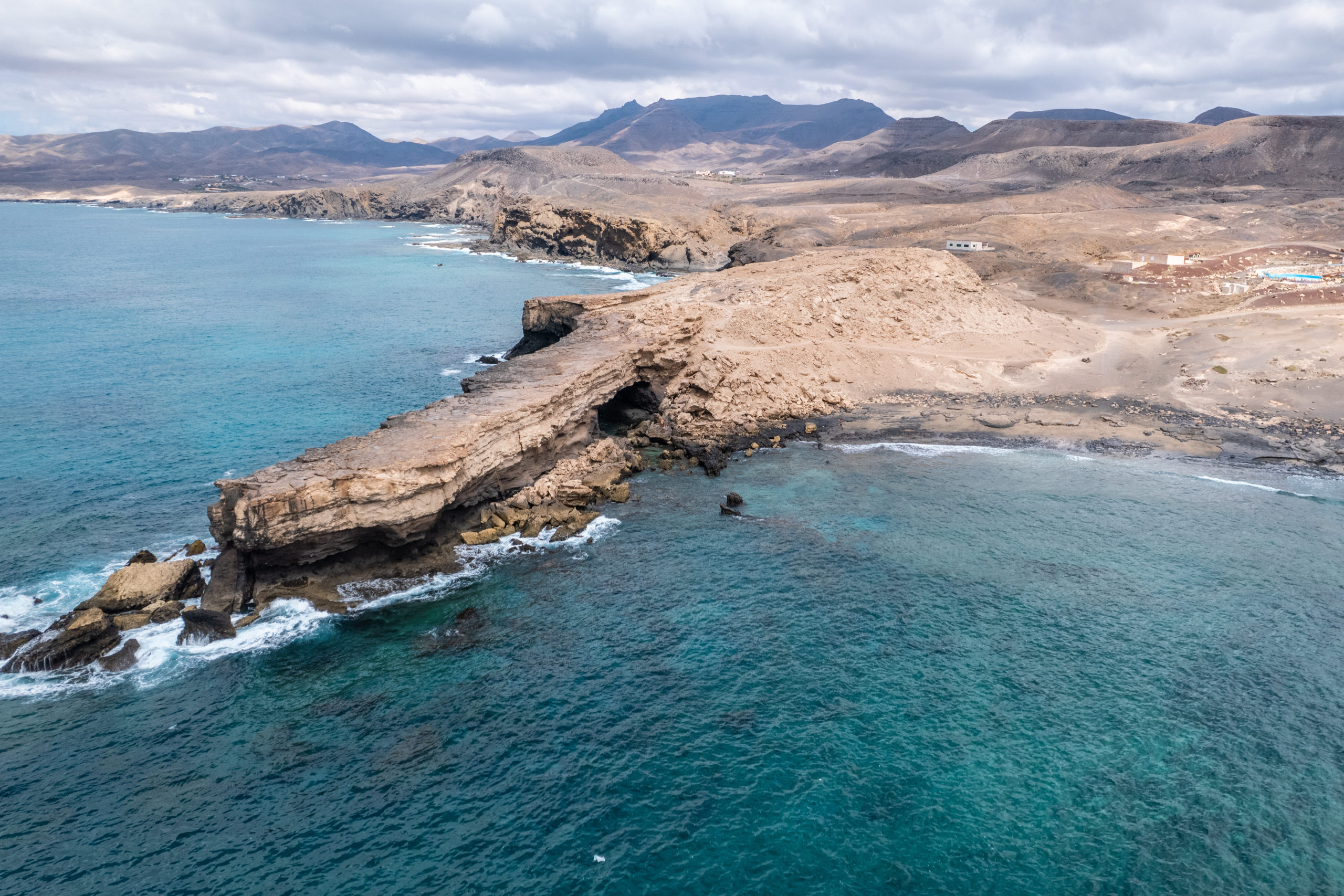
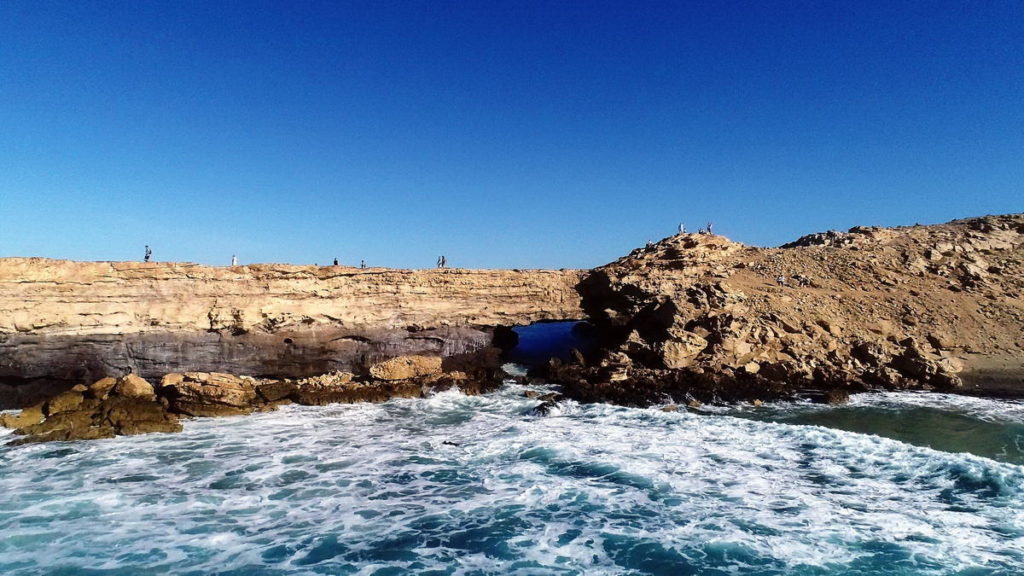
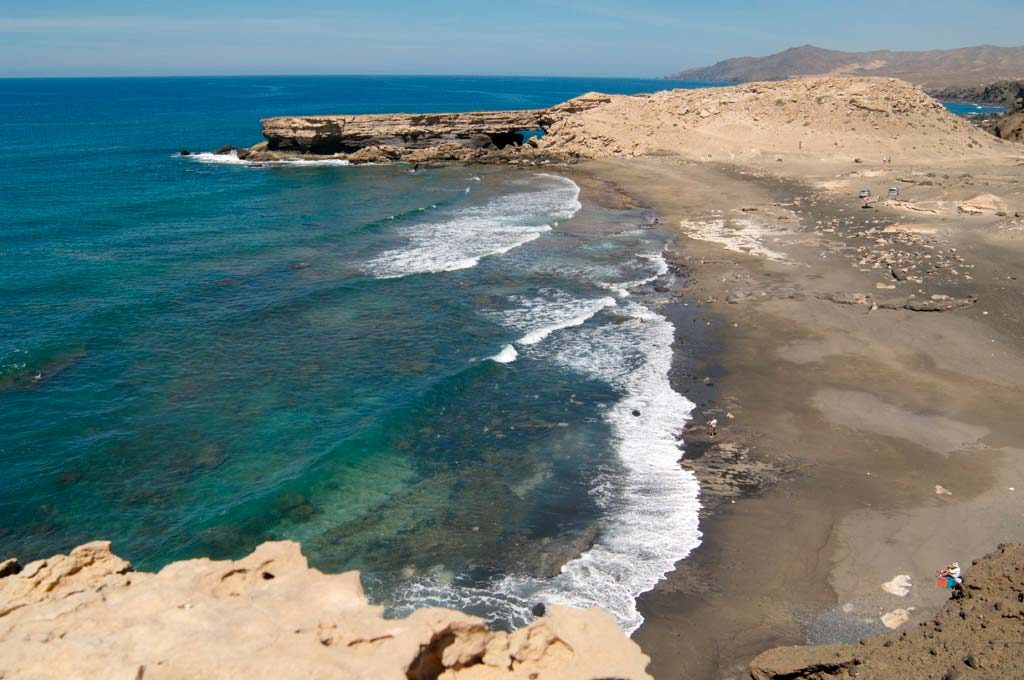
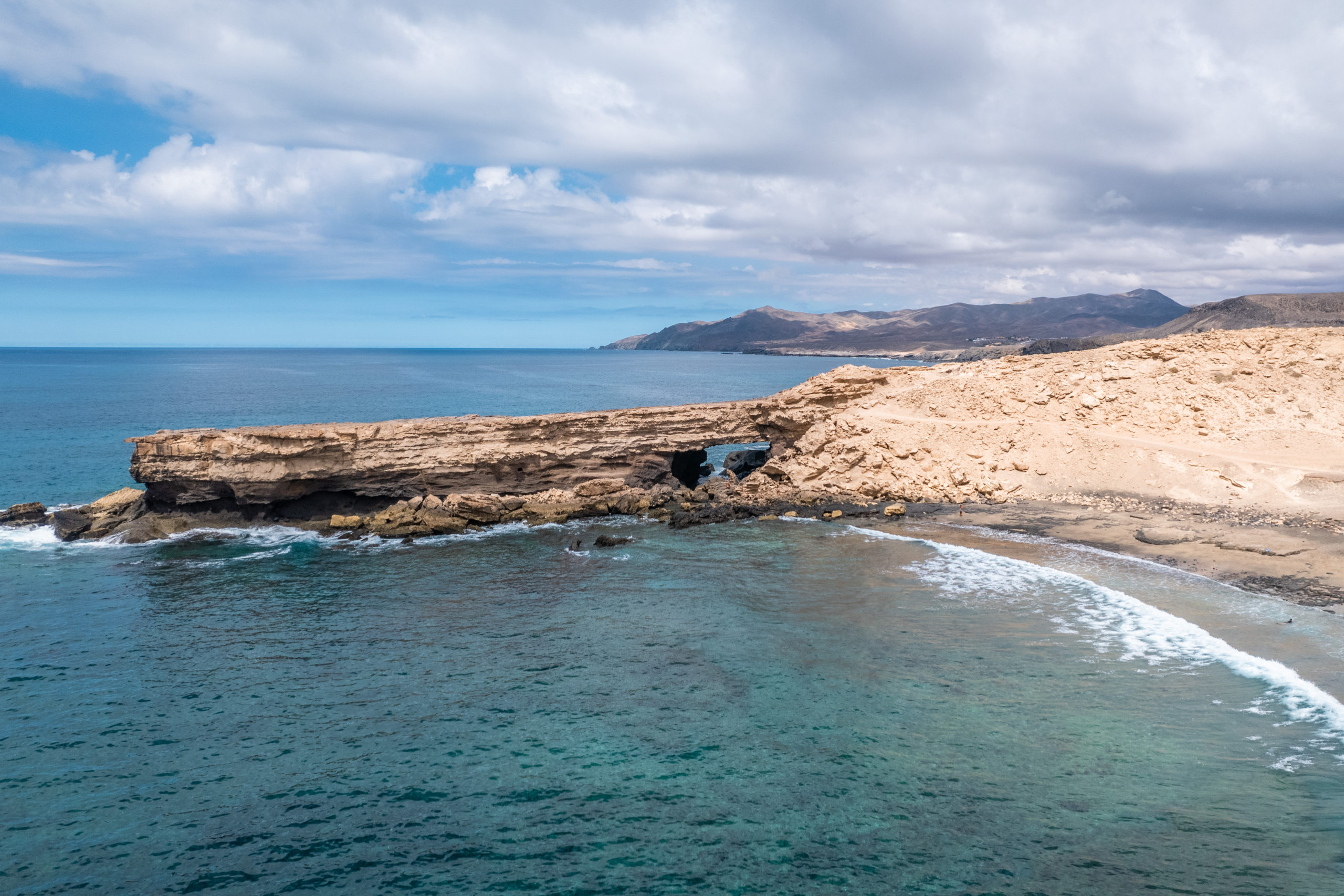
The route begins in the parking lot of the Bahía La Pared restaurant, which is easily reached as it is well signposted. From there we go down to La Pared beach , closed to the north by an interesting cape known as Punta de Guadalupe that we easily ascend. It is a highly eroded white sandstone ledge that marks the meeting point of the fossil sands, to the south, with the black pyroclasts to the north. Be very careful if there is rough seas , because the waves can reach up there and drag us. The wind has carved its surface with capricious shapes, while the sea managed to pierce it completely until opening a tunnel under its bulk; it is what in Fuerteventura is known as jury , lexical evolution of holed.

The vegetation here is perfectly adapted to the saline and sandy environment. Near the ravine you can also see some specimen of the Famara lock . Protected by law, it is beautiful and unique in the world, as it only grows in Lanzarote and Fuerteventura. It is forbidden to cut its flowers or damage it.

unevenness
80m

Duration
1 hour 45 minutes

Distance
4.2km

Difficulty
Half
mouth of a stream

Arriving at La Pared beach, we cross it following the profile of the coast. At the opposite end, a ravine empties out, always with brackish water in this last section of its route, a thin sheet that is immediately absorbed by the sand. Despite its humility, it is a very interesting aquatic ecosystem dominated by twisted tamarisks and green Moorish bushes. A place where it is not difficult to surprise the restless Lesser Sandpiper and the shy Sardinian Warbler finds refuge.

Crossing the small river, a path takes us along the sandy slope towards the upper plains. Here, in addition to sea gooseberries and zig-zag immortelles, the first specimens of pulicaria majorera appear.

Isthmus of La Pared

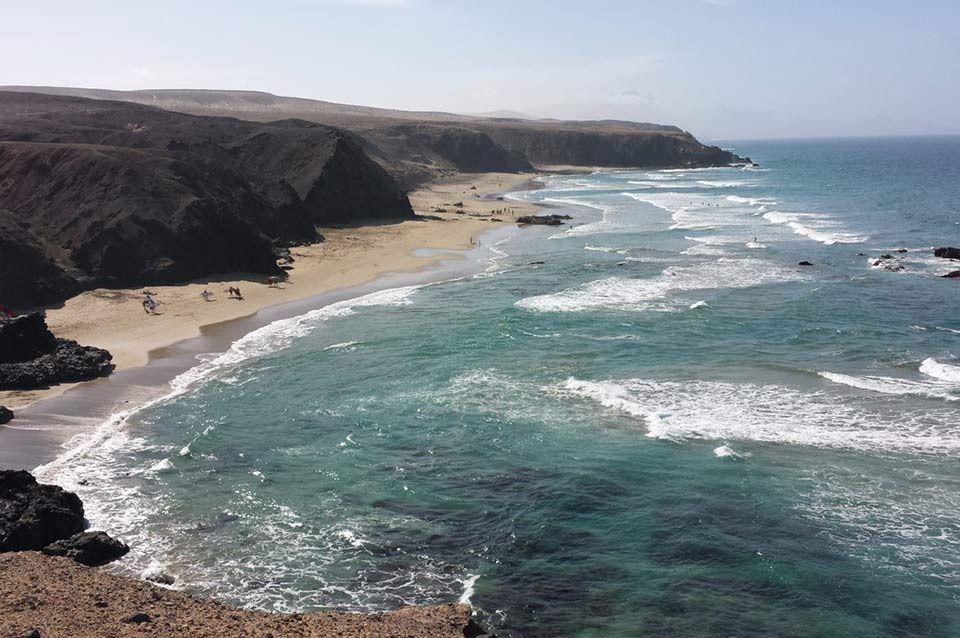
Once at the top, the isthmus of La Pared appears to us as an immense plain of astonishing aridity. We reach the stairs that allow us to go down to the Old King beach , perfect for surfing and nudism. We do not descend but follow the trail to the west.

The last descent to the beach is a steep ravine called Piedras Negras that we will climb towards the small Pueblo del Mar urbanization. From there, the path takes us back to La Pared and to the point of origin, after crossing the ravine again through a section where the tarajal is thick, almost jungle.
Camino a la Playa

La ruta comienza en el aparcamiento del restaurante Bahía La Pared, al que se llega fácilmente pues está bien señalizado. Desde allí bajamos a la playa de La Pared, cerrada al norte por un interesante cabo conocido como Punta de Guadalupe que ascendemos fácilmente. Es un saliente de blanca arenisca muy erosionada que marca el encuentro de las arenas fósiles, al sur, con los negros piroclastos del norte. Mucho cuidado si hay mala mar, pues las olas pueden llegar allí arriba y arrastrarnos. El viento ha tallado su superficie con caprichosas formas, mientras que el mar logró perforarla por completo hasta abrir un túnel bajo su mole; es lo que en Fuerteventura se conoce como jurado, evolución léxica de agujereado.

La vegetación está aquí perfectamente adaptada al ambiente salino y arenoso. Cerca del barranquillo también puede verse algún ejemplar de la cerraja de Famara. Protegida por la ley, es bella y única en el mundo, pues sólo crece en Lanzarote y Fuerteventura. Está prohibido cortar sus flores o dañarla.

Desnivel
80 m.

Duración
1 hora 45 minutos

Distancia
4,2 km.

Dificultad
Media

Desembocadura de un arroyo

Llegados a la playa de La Pared la atravesamos siguiendo el perfil de la costa. En el extremo opuesto desemboca un barranco siempre con agua salobre en este último tramo de su recorrido, una delgada lámina que enseguida es absorbida por la arena. A pesar de su humildad supone un interesantísimo ecosistema acuático dominado por retorcidos tarajales y verdes matos moros. Un lugar donde no resulta difícil sorprender al inquieto andarríos chico y encuentra refugio la tímida curruca cabecinegra.

Traspasado el pequeño río, un sendero nos lleva por la ladera arenosa hacia los llanos superiores. Aquí, además de uvillas de mar y siemprevivas zig-zag aparecen los primeros ejemplares de pulicaria majorera.

Istmo de La Pared

Una vez arriba, el istmo de La Pared se nos presenta como una inmensa llanura de aridez asombrosa. Llegamos hasta las escaleras que permiten bajar hacia la playa del Viejo Rey, perfecta para practicar surf y nudismo. No descendemos sino que seguimos el sendero hacia el oeste.

La última bajada hacia la playa es una empinada cañada denominada de Piedras Negras que subiremos en dirección a la pequeña urbanización Pueblo del Mar. Desde ella el camino nos lleva de nuevo hacia La Pared y al punto de origen, después de atravesar de nuevo el barranco por un tramo donde el tarajal es espeso, casi selvático.